Reactive Dog Threshold: How to Know When Your Dog Is Too Close
If you've read anything about reactive dogs, you've probably run into the word "threshold." It's one of the most useful ideas in this whole topic — and one of the most commonly misunderstood. Understanding it well can change how you read almost every walk.
What threshold actually means
Threshold is the point at which your dog stops being able to think clearly and starts reacting on instinct. Below threshold, your dog can notice a trigger, take treats, respond to cues, and make choices. Over threshold, none of that is reliably available to them — they're in survival mode, not learning mode. This matters because training only works in the state below threshold; once a dog is over it, they're not in a position to learn a calmer association, they're just getting through the moment.
Why threshold isn't one fixed distance
It's tempting to think of threshold as a single number — "my dog's threshold is ten metres." In practice it moves, sometimes from one walk to the next, because it's shaped by several things happening at once, not distance alone.
Three rough zones to think in: a green zone where your dog is comfortable and aware, a yellow zone where they've noticed a trigger but can still look at you, take a treat, and think, and a red zone where they've gone over threshold and are reacting. The goal of most training exercises is to work right at the edge of the yellow zone — close enough to notice the trigger, far enough to stay thinking.
What shifts a dog's threshold
Distance is the lever most owners reach for first, and it's usually the fastest way to bring a dog back under threshold. But several other factors change how "big" a trigger feels, sometimes more than raw distance does:
Trigger intensity
How fast something is moving, whether it's approaching directly toward your dog, how long it stays in view, and how much noise or unpredictability is involved all affect intensity. A dog standing still fifteen metres away can be easier than a dog running directly at yours from five.
Movement and direction
A trigger moving away is generally easier than one moving closer. A trigger crossing your path is often easier than one heading straight on.
Environment and noise
A narrow path, a blind corner, traffic noise, or several things happening at once all add to what your dog is managing, on top of the trigger itself.
Surprise
A trigger that appears suddenly — from around a corner, out of a doorway — tends to produce a stronger reaction than one your dog had time to notice and assess from a distance.
Duration
How long a trigger stays in view matters too. A dog can often tolerate a brief glimpse of something that would be too much if it lingered.
Why taking treats isn't a perfect measurement
Many owners use whether their dog will take a treat as a rough gauge of whether they're under threshold — and it's a genuinely useful, practical observation. But it isn't a precise scientific measurement. Some dogs will still take food when quite stressed; others go off food well before they visibly react. Treat-taking is one helpful data point among several, not a definitive threshold test on its own. Reading body language alongside it — see the early signals that come before a reaction — gives a fuller picture.
Why waiting for barking or lunging is often too late
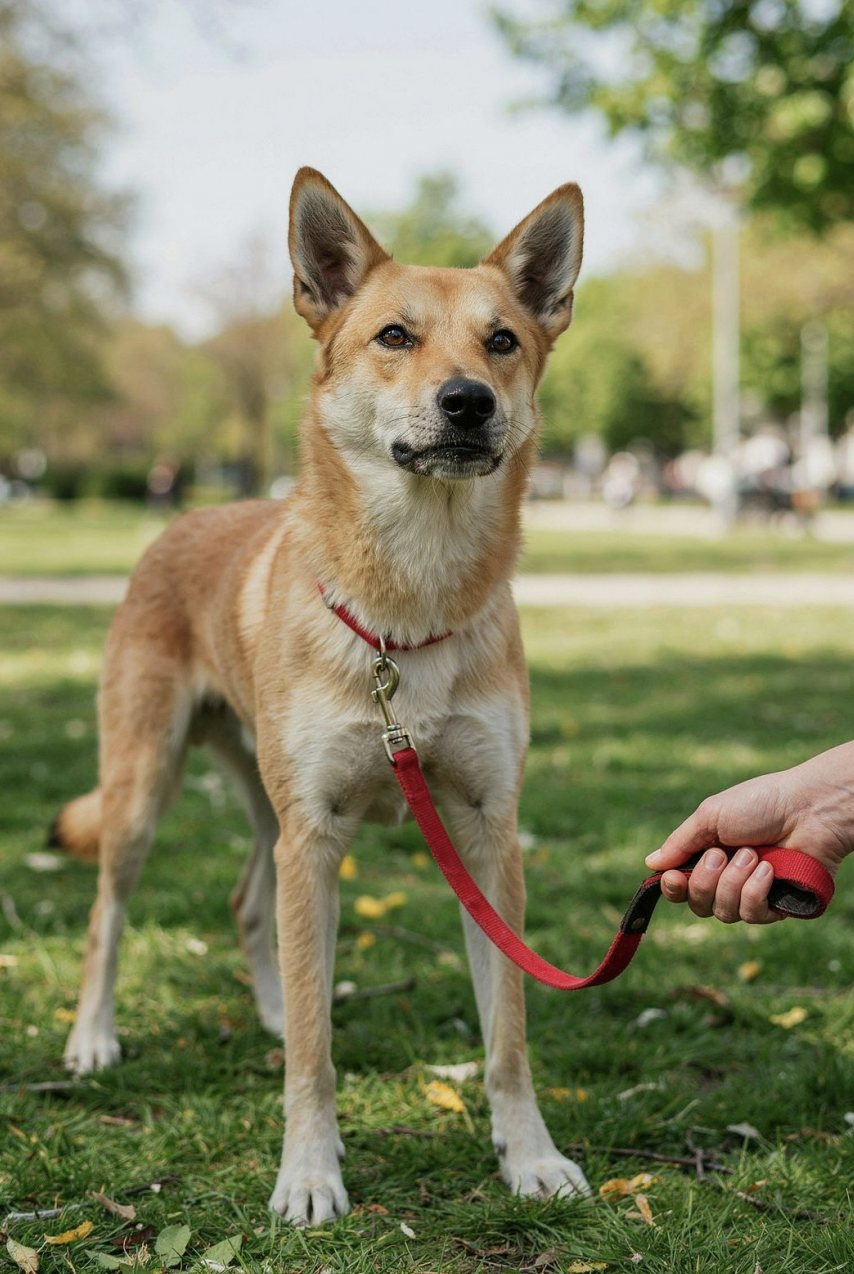
By the time your dog is barking, they've usually crossed well into the red zone. Recognising the yellow-zone signals — a sudden freeze, ears shifting, weight leaning back, a stiff tail, fixated staring — gives you time to act while your dog can still make choices, rather than trying to manage a dog who's already over threshold. This is part of why threshold and body language work go hand in hand; see Why Does My Dog Bark at Other Dogs on Walks? for the fuller picture of what's driving the reaction itself.
Using distance as a training tool, not just a management tool
Distance isn't only something to fall back on in a crisis — it's also the foundation of most effective, reward-based training. Working consistently at a distance where your dog notices a trigger but stays under threshold, and pairing that trigger with something good, is how many dogs gradually build a calmer association over time. Progress should be guided by your dog's actual response on any given day, not by an arbitrary number of sessions or a calendar deadline. Some days your dog's working distance will be further out than others, and that's normal rather than a sign you're doing something wrong.
Finding your dog's working distance
A practical starting point: find a distance from a typical trigger where your dog notices it but can still look back at you, take a treat, and move on comfortably. That's your working distance for that walk — and it's normal for it to shift depending on the day, your dog's energy, and what's already happened earlier.
Tracking what actually helps
Because threshold moves around so much, it's genuinely hard to keep track of purely from memory. Noting the trigger, the approximate distance, and how your dog responded after a handful of walks tends to reveal patterns — which triggers are hardest, which environments make things easier, how quickly your dog usually recovers. Our free Reactive Dog Trigger Tracker is built for exactly this kind of tracking.
What to do when your dog goes over threshold
It happens to every owner eventually, even with good management. When it does: get distance as calmly and quickly as you can, avoid adding pressure through the leash, and give your dog a few quiet minutes to settle before continuing or asking anything else of them. There's little to be gained from trying to train in the moment right after a dog has gone over threshold — that's a moment for recovery, not learning.
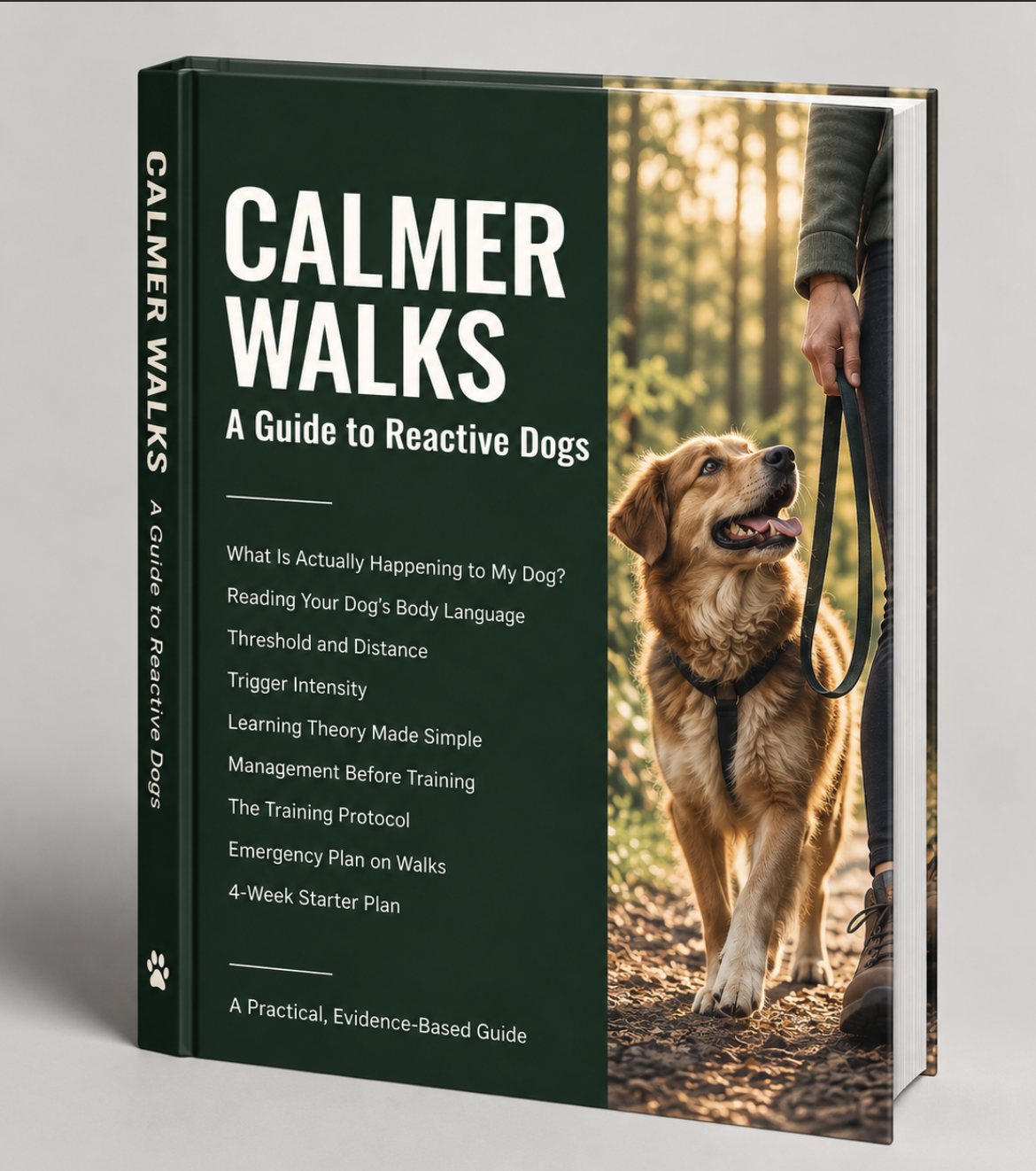
Want the complete framework? Calmer Walks brings threshold, distance, trigger intensity, body language, management, and a step-by-step training protocol together in one practical guide. Explore the Guide →
Sources & further reading
This article draws on published, reward-based behavioural science and position statements from recognised veterinary and animal-behaviour organisations, including the American Veterinary Society of Animal Behavior (AVSAB) and the ASPCA, paraphrased and explained in plain language rather than quoted directly.
This article is educational information, not a diagnosis. If your dog has a bite history or the reactivity involves serious aggression, speak with a vet or a qualified, force-free behaviour professional.
The guide
Threshold, mapped out in full
Calmer Walks dedicates a full chapter to threshold and distance, plus trigger intensity, a training protocol, and an emergency plan for the walks that don't go as planned.
Explore the Guide